Built with SODAX



















Bound
For Bitcoin-native applications that want to give BTC holders trading and money-market lending across 18+ networks, self-custodied from entry to settlement, with no wrapping and no centralized exchange in the middle.
GRELFSWAP
At a glance
- Stocks page runs on the SODAX API end to end
- Buy tokenized stocks with HBAR or USDC
For Hedera apps that want to offer tokenized stocks, paid in HBAR or USDC and delivered to the user's own account, with no inventory or order book to run.
About GRELFSWAP
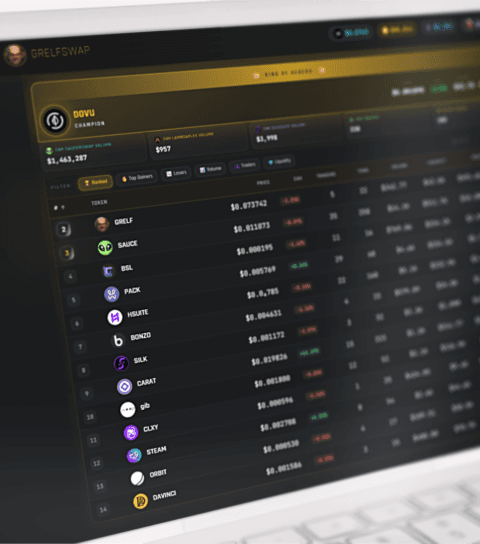
GRELFSWAP is a Hedera DEX aggregator built around one idea: every route on Hedera, one swap, signed in your own wallet. It started as a hobby, a place to swap with lower fees than other platforms.
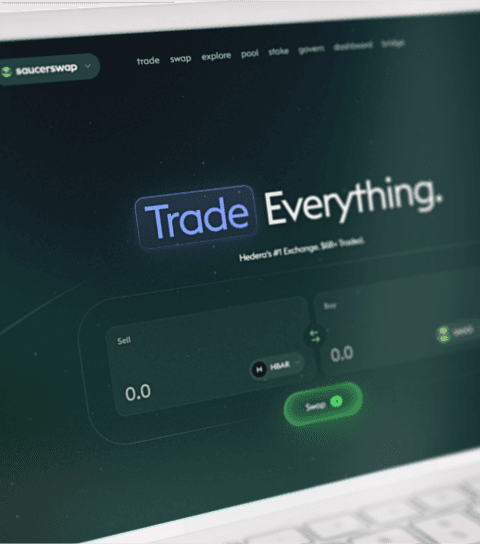
It now includes a live token leaderboard, a swap page that shows the route before you sign, a Stocks page, rewards, a prediction game, a public agent API and MCP server, and an embeddable widget.
The Challenge
GRELFSWAP's Hedera traders wanted some of their dollars in something that isn't crypto, without leaving Hedera. Offering that meant solving delivery and execution.
Stocks meant leaving Hedera. Traders wanted a more balanced portfolio, but moving dollars into stocks usually meant going elsewhere.
Delivery had to stay on Hedera. Buyers wanted tokenized stocks that land as tokens in their own Hedera account.
Running it alone is heavy. Holding stock inventory and running an order book is a lot to build and operate.
The Solution
GRELFSWAP runs its Stocks page on the SODAX API from start to finish. GrelfSwap builds the transaction, the user signs it in HashPack, and a solver fills the order.
Tokenized Stocks Paid in HBAR or USDC
On the Stocks page, traders buy and sell tokenized stocks with HBAR or USDC. The stocks land as tokens in their own Hedera account.
Full Order Flow Over the API
GRELFSWAP pulls the token list, gets a quote, creates the intent, and builds the Hedera transaction through the SODAX API. The user signs it in HashPack. GRELFSWAP sends the signed transaction back to SODAX, then watches the intent until a solver fills it.
No Inventory, No Order Book
The user signs in their own wallet and a solver fills the order. GRELFSWAP has no inventory and no order book to run on its side.
Partner Fee and Verified History
GRELFSWAP's partner fee goes through the partner fee address and is claimed through the API. It also records every order from the Hedera mirror node, so history and volume show what settled on chain.
The Results
Tokenized Stocks on Hedera
GrelfSwap's Stocks page is live. Traders buy and sell tokenized stocks with HBAR or USDC, delivered to their own Hedera account.
Full Order Flow on the API
The whole Stocks flow runs on the SODAX API: token list, quote, intent, Hedera transaction, user signature, and solver fill.
No Inventory Needed
GrelfSwap builds the transaction and the user signs, while a solver does the rest. There is no inventory or order book to run.
History That Matches Chain
GrelfSwap records every order from the Hedera mirror node, so its history and volume show what really settled on chain.
SODAX Integration
HTTP API Layer
@sodax/swaps-api
HTTP interface GRELFSWAP uses for its Stocks flow: token list, quote, intent, transaction build, and status.
GRELFSWAP integrates SODAX through the HTTP API on its Stocks page: token list, quote, intent, Hedera transaction signed in HashPack, signed transaction sent back to SODAX, and intent status tracking until a solver fills it. The partner fee is claimed through the API.
Feedback
"SODAX was really easy to integrate and it had exactly what we were looking for: tokenized assets delivered on Hedera, with Hedera treated like a real chain and not an afterthought. We build the transaction, the user signs, a solver does the rest. No inventory and no order book to run on our side."
Founder, Grelfswap