Built with SODAX























Bound
For Bitcoin-native applications that want to give BTC holders trading and money-market lending across 18+ networks, self-custodied from entry to settlement, with no wrapping and no centralized exchange in the middle.
Bound
At a glance
- Native BTC live across 18+ networks
- ~1 minute end-to-end settlement
- Self-custodied from entry to settlement
- No wrapping, no bridges, no centralized exchange
For Bitcoin-native applications that want to give BTC holders trading and money-market lending across 18+ networks, self-custodied from entry to settlement, with no wrapping and no centralized exchange in the middle.
About Bound
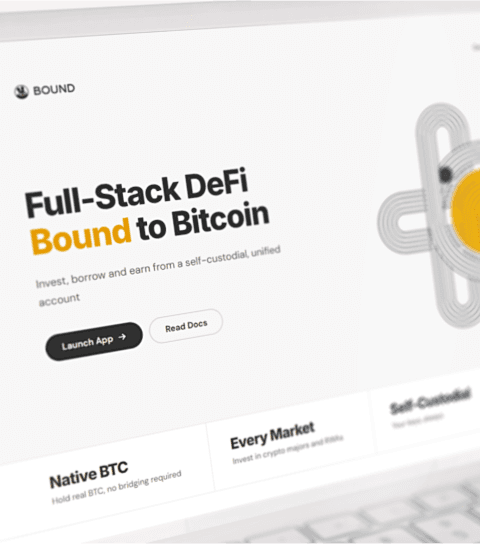
Bound (formerly radFi) is full-stack DeFi built natively on Bitcoin. Users trade, borrow, and earn from a single self-custodial account, with no KYC, no bridges, and no liquidations.
Through Bound, holders trade crypto majors like ETH, SOL, BNB and USDC alongside RWAs, with atomic on-chain settlement secured by their own keys.
The Challenge
Bitcoin holds around 60% of the crypto market with over $1.5 trillion in market cap, but less than 1% of that supply is active in DeFi today. Builders bringing BTC on-chain have faced two compromises:
Wrapping the asset, which introduces a custodian between the user and the underlying Bitcoin (wrapped BTC alone accounts for over $8 billion in TVL).
Routing through a centralized exchange, which adds custody, latency, and counterparty exposure to what should be a self-custodied trade.
Bound's settlement architecture solves custody on the Bitcoin side, but reaching liquidity across every other network would have meant building cross-network execution infrastructure from scratch.
The Solution
Bound integrated the SODAX SDK to expose native Bitcoin across 18+ networks through a single intent-based execution call.
Sub-Block Settlement, Full Custody
Bitcoin-side settlement runs on a two-of-two multisig trading wallet that lets solvers treat a transaction as final at the moment of broadcast, settling end to end in approximately one minute.
Liquidity Across 18+ Networks, Out of the Box
A single SDK integration exposes native BTC across Ethereum, Solana, Arbitrum, Base, Avalanche, Sui and more.
No Wrapper, No Centralized Hop
Native BTC moves into and out of Bound without WBTC, without a centralized exchange round trip, and without bridge custody.
First to Market
The partnership made Bound first to market with native Bitcoin inside a cross-network execution system.
The Results
Native Bitcoin, Self-Custodied
BTC holders trade and use native Bitcoin as collateral without wrapping or a centralized exchange, keeping custody from entry to settlement.
18+ Networks of Liquidity
Native BTC is addressable from every supported network, with quotes returned through intent-based solver and settlement handled atomically.
~1 Minute Settlement
Two-of-two multisig allow solvers to treat Bitcoin transactions as final at broadcast, settling end-to-end in about a minute.
First to Market
Bound landed first to market with native Bitcoin inside a cross-network execution system, without building execution infrastructure itself.
xStocks on Bound
The release of xStocks on Bound is the first time you can swap directly from native BTC to xStocks on-chain.
Live price-candle market data
Bound powers its charts with asset price history pulled directly from SODAX.
SODAX Integration
Foundation Layer
@sodax/sdk
The same intent-based execution call that routes EVM, Solana, and Sui now resolves to native Bitcoin too.
Connection Layer
@sodax/wallet-sdk-react
Opinionated React wrapper with pre-built context providers and state management for wallet connections.
Experience Layer
@sodax/dapp-kit
An opinionated collection of UI components, hooks, and utilities that leverages the layers below it.
Three integration paths for SDK partners: wallets, DEXs and aggregators, and money markets.
Feedback
"Bringing native BTC trading directly against assets like ETH and SOL isn’t just an incremental improvement, it’s a new primitive. This integration with SODAX sets the foundation for the fastest native BTC-to-anything trading experience in the industry"
Co-Founder, Bound