
SODAX Whitelists 16 Assets for Hedera
SODAX has whitelisted 16 assets for Hedera, including USDC, BTC, ETH, SODA, HBAR, and many more. All are addressable for any partner application building their execution and liquidity with SODAX.
SODAX Team
•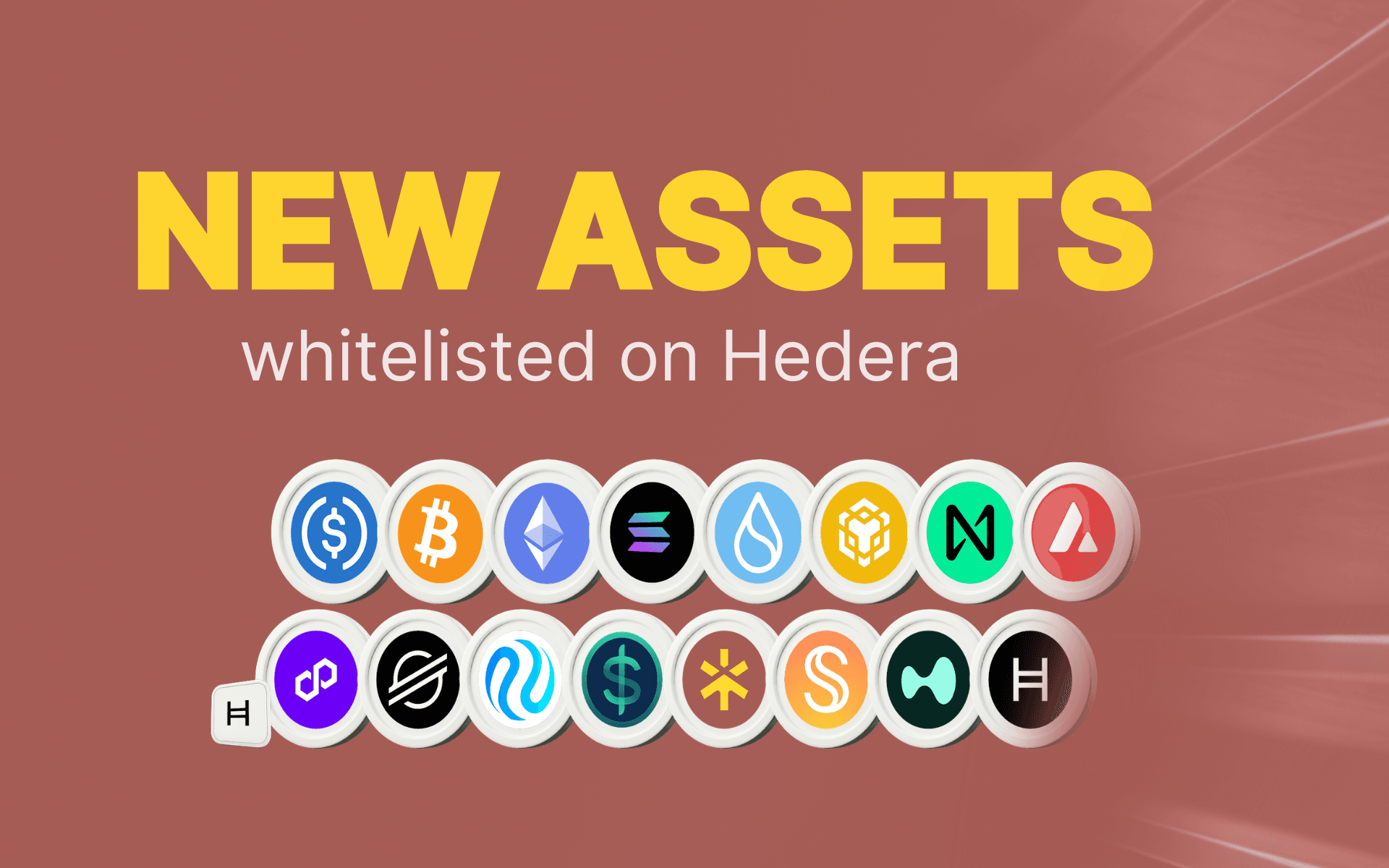
SODAX has whitelisted 16 assets for Hedera: USDC, BTC, ETH, SOL, SUI, BNB, NEAR, AVAX, POL, XLM, INJ, bnUSD, SODA, USDS, HYPE and HBAR, all reachable through any partner application already building their execution and liquidity with SODAX.
Many of these aren't Hedera-native. They're direct, liquidity-backed versions of assets like ETH, BNB and POL, routed through their own real liquidity elsewhere, not thin wrapped copies minted against locked collateral.
Any team already shipping on Hedera inherits the full set through one SDK connection, no new per-asset integration required.
Hold a bridged version of ETH on most networks, and you're holding a promise. Of a token minted against whatever got locked on the other side, trading in whatever thin local pool exists for it. Hedera users and builders reaching for assets outside Hedera's own ecosystem have mostly had to accept that tradeoff until now.
SODAX has whitelisted 16 assets for Hedera: USDC, BTC, ETH, SOL, SUI, BNB, NEAR, AVAX, POL, XLM, INJ, bnUSD, SODA, USDS, HYPE and HBAR. Every one is now addressable for partner application building on the SODAX execution system: tradable, usable as collateral, and available for lending and borrowing across Hedera and the rest of the 21 networks SODAX supports, with liquidity routed across blockchain networks underneath.
What's now live on Hedera
HBAR is Hedera's own asset, and it's now reachable the same way from every other SODAX-connected network. bnUSD and SODA are native to the SODAX system itself. USDC and USDS are stablecoins that already move across many networks. The remaining eleven, BTC, ETH, SOL, SUI, BNB, NEAR, AVAX, POL, XLM, INJ and HYPE, are the native assets of other networks SODAX integrates with, now addressable directly from Hedera for the first time.
That last group is where most of the explaining needs to happen, because it's easy to assume they work the way bridged assets usually do. They don't.
Direct assets, not wrapped copies
A typical bridged token exists only on the network it landed on. It's backed by collateral locked somewhere else, trades in its own shallow local pool, and can drift from the real asset's price if that pool thins out or the collateral backing its bridging comes into question.
Hold ETH on Hedera through SODAX, and it's ETH. Not a wrapped derivative or not a synthetic asset issued under a different ticker. Every trade into or out of it routes through ETH's own native liquidity, across Ethereum and the other deep pools where ETH already trades at scale. Independent solvers handle execution with SODAX's cross-network execution system coordinating routing and settlement underneath. The asset arrives on Hedera, liquidity-backed, and ready to use across Hedera’s DeFi ecosystem.
The same holds for BNB, POL, and the rest of that list. Each one taps automatically into its deep unified liquidity once used, wherever that liquidity actually lives.
What this means for builders on Hedera
Any team already shipping on Hedera inherits this full 16-asset set to hold on Hedera network, through a single SDK connection. Alongside this, they gain the ability to route asset flows to over 100 assets across our 21 supported blockchain networks. No per-asset integration, no separate liquidity to source, no wrapped-token workaround to maintain. USDC, BTC, ETH and the rest show up inside the product exactly as they would anywhere else SODAX operates, typically a token-list refresh away for teams already integrated.
Teams building on Hedera can learn more about SODAX at sodax.com, or start building today at docs.sodax.com. On our website, you can find the full list of SODAX whitelisted assets in our asset directory, alongside the growing list of partner applications already live with them.
definewsannouncementwhitelisting